I am not disposed by fire, air, water and dust. I am neither A Hindu nor a Turk, my identity lies neither int he wilderness of Arabia nor within the walls of Lahore. I am not the secret essence strenuously revealed by creed and religion. I was not born of Adam and Eve. I did not adopt my name nor can I own any. I am neither stationary nor adrift. can I know who I am?
It is I myself I know to be the beginning and the end. Neither do I recognise any other being. It is nowhere else but within myself that perception and knowledge are embodied. Then who is he that stands as the Other? And who am I? Can I know bulleh?
----Bulleh Shah
Time has no loyalty;
the single moment is our treasure.
Dance in the loyal covenant from the beautiful ones.
Constant seeking is delight-
why do you think of getting over it?
Give up walking-
dance at the sound of the caravan bell.
---Ghalib.
(astarte, if you have a better translation please do float it along)
I was one, then I was two, then one again. But one is not a number. There are so few places for the way I feel. Why do you search for the unsearchable, for a place that lasts forever? You do not know. It is strange now that you think of it. The past, even though never really completed, can never give birth to the future. But neither is this unraveling of the thread any use to you. You are not a mystic, it's not in your bones. If there is no pattern, no unity, but a series of discontinuous fragments, as if one were passing from one dream to another, then you have no name.
To see the world like a tree, through the latticework of a thousand unanswered prayers. Sky rain, and cloud intermingle..it's on your skin. Open to the elemetal, sometimes light strikes. Satori : the illumination of emptiness. But we see everything separately, abstractly, from a distance. And our lights are our own. On a clear night you grow in the lightness of the moon; we, on the other hand, are reduced to speaking in metaphors. Neither poetry nor philosophy, neither words nor thought gets us there.
Early this morning whilst walking past some trees I wondered to myself: why do we put nameplates on trees? Is it because they have no title, no signature of their own? Strange to think they were here before us, as Fate would have it. Like gods, panging for finitude. Pillars of eternity. I pass another. Someone has carved a heart on it. The scar, the wound, the only sign of humanity?
Friday, February 29, 2008

Monday, February 25, 2008
Autumnal
Autumn has finally broken through. Fading, soaring. All of summer, the memories of warm sunshine, have been rolled into these early mornings. These turning points are passageways, the dihliz. The brilliant crisp light conceals a certain sadness. It breathes of all that is new, of all the possibilities that quiver with expectation, hovering over our lives, waiting for the moment to enter the world and open us up to it. This bitter-sweetness is of an intensity that cannot be explained. Today the world is merely a fact. The trick is to but tilt one 's head, look at it at a slight angle to the universe.
Today the swami reminded me of that rare bird, Mr. Lewis. Here was a man who was dying of cancer and knew that he had only a few months to live. What does he do? Buy a sports car. Seeing that the swami is upset by this he says, "Don't worry, I'm not going to die". He then tells Ubo that he is going to run away with the swami. But what goes through the mind of such a person? At his death bed he sees that the swami is sad. "But why so sad, you'd think you're the one who's dying! I told you, don't worry, I'm not going to die." And still he goes on, undimmed, the flame unconquered -even if slightly bluer now. The last words of the man, though, say something unique and speak of what it is to be human, all too human: "Who will look after my mother now..will she be able to survive in a home?" That at such a moment he could transcend his own suffering to think of his old, silver-haired mother, that he could imagine those quiet, empty days when she would have no-one to tell those stories to, those evenings of the mind when the dull, monotonous humdrum takes over and the orange street lights burn with such loneliness,..can there be a greater gesture of the human soul?
You've got to stand your test in judgement,
You've got to stand it by yourself,
Ain't nobody can stand it for you
You've got to stand it by yourself.
---Big Bill Broonzy
She's gone forever
I know when one is dead, and when one lives.
She's dead as earth...
Why should a dog, a horse, a rat have life, and thou no breath at all?
Thou'lt come no more.
Never, never, never, never, never!
----King Lear.
August 16, 2007
~~~~
My kismet: alas, what is beautiful reminds me of death.
(hey, what did you expect with a name like Black Sun?)
A Ph.D will not help you die..it won't even help you live! What knowledge can? Philosophy won't take you there. If you've got it, you've got it. It's a gift.
I remember the swami looking at my thesis for a good two minutes before casually flinging it to one side. What is this rubbish? It's nothing but equations. There are no words. If an ordinary person like me cannot understand it, what's the point?
Love it!!! My thoughts exactly. All those pointy heads. I think Kenneth Clarke said they're as thick as swans.
A dear English friend said, how traumatic that must have been.
Er..no, actually, I thought it was a pretty good assessment :)
~~~~
Was in the video store -you can tell how old I am since I still use words like that or "disco" or marathon rather than the bastardised Americanism, 'snickers'-and two young kids were joking about dying. "You don't think I'll be blown up by a suicide bomber do you"
"No, why do you say that, shazada"
"Who knows, these 'sister-fuckers' are everywhere nowadays."
"But they haven't hit Lahore, yet?"
"I know, I'm going to Pindi though"
"Yaar, make sure you give my 300 Rs back before you go"
Then a bearded security man walks in with a rifle and I overhear him talking about videos.
"No, we don't sell them any more. We haven't had any for ten years, which world are you living in brother?"
When he leaves, shuffling his feet (head down) as he does so, they laugh to themselves. "Dumb ass!"
~~~~
I just had to cut and paste this from Ali's blog.
The fanaticism of a 'western' (probably American) muslim:
The urban elite is only Muslim for Ramadan so they can stuff themselves with their greasy stinky foods into their disgusting pot bellies. Other than that, they are largely classist, racist, materialistic pieces of shit. They mix freely with the opposite sex,make porn tapes, wife swap, and all types of scandalous shit. I know cause I’ve seen this firsthand. Everybody lies and fronts, their parents are corrupt businessmen. This is what I’ve seen in Dhaka, I doubt Karachi or Lahore is any different. So much for respect for elders. This is just desi Muslims, its even worse with Arabs (”they should;ve never gave these niggas money”) and Persians and etc.
Sunday, February 24, 2008
Tawakkul
And unto everyone who is conscious of God, He always grants a way out of unhappiness, and provides for him in a manner beyond all expectation; and for everyone who places his trust in God He alone is enough. Verily, God always attains to His purpose: and indeed, unto everything has God appointed its term and measure.
Q:65:2-3
It is highly inappropriate to cite verses like this, out of context, and without any formal education or training. But the words strike me as expressing such a truly remarkable quality, a dazzling human quality -that of trust-that I felt compelled to do so.
Last night I had a terrible dream. I was praying in an open field but I couldn't understand the language of the leader of the prayers. And the old man had a strangely elongated face (something like an old Russian icon I'm familiar with). Everyone wore tall, rounded black hats and some prayed with gnarled hands outstretched to the heavens. And the frightening thought occurred to me: what a terrible thing it must be to lose one's faith and what a gift it is that one has any....
(the dream ended on a positive note as I followed a white horse until I came to a small green gate in a wall....)
From 'Radical Hope':
After the destruction of the Crow's way of life it was difficult to comprehend anything. Did anything make sense any more? The very frame of reference had shifted. One is reminded of the ethics of the horizon, the limit, when Agamben talks about the camps. What sense can there be when one is beyond the bounds of reason-bounds that have been set by the way of life?
She laments, ' I'm living a life I don't understand'.
Plenty Coups sees in a dream the ending of the traditional way of life. But he sees something else as well: The tribe relied on what it took to be the young men's capacity to receive the world's imaginative message; it relied on the old men to say what these messages meant.
What did Plenty coups see? He saw the dissolution of the old world; he saw that he and his people were living on the edge, that a radical discontinuity in their narrative, their lives, was about to take place. In short: he had imagined the unimaginable. But to imagine is not to know. [It goes without saying that the dream is not merely a subjective experience, as the moderns would have it].
Plenty Coups is told that his people will survive, but they will only do so if they learn to listen, learn to be open; this, in effect, means a radical openness to the new, to the possibility of possibilities. By doing so they would know which month of winter they are in. This entails a suspension of the traditional ethical life, what they have always considered as the good. It is, as Kierkegaard says, the teleological suspension of the ethical in order to lead into a higher life or, as in their case, to preserve the holy.
And here is the key passage, the words that Lear infers Plenty to have spoken or thought about when understanding his dream-vision.
God-Ah-badt-dadt-deah -is good. My commitment to the genuine transcendence of God is manifest in my commitment to the goodness of the world transcending our necessarily limited attempt to understand it. My commitment to God's transcendence and goodness is manifested in my commitment to the idea that something good will emerge even if it outstrips my limited understanding of what that good is.
A commitment to good that transcends our own understanding, our own subjectivity. Such a thing is difficult in normal circumstances; in the face of tragedy and despair it requires superhuman resources and I can only imagine that such trust is , in itself, given to us (as Citizen might say, a matter of grace).
~~~~~~
"..because when these birds feel that the time has come for them to die, they sing more loudly and sweetly than they have sung in all their lives before, for joy that they are going away into the presence of the god whose servants they are. It is quite wrong for human beings to make out that the swans sing their last song as an expression of grief at their approaching end; people who say this are misled by their own fear of death, and fail to reflect that no bird sings when it is hungry or cold or distressed in any other way; not even the nightingale or swallow or hoopoe, whose songs are supposed to be a lament. In my opinion neither they nor the swans sing because they are sad. I believe that the swans, belonging as they do to Apollo, have prophetic powers and sing because they know the good things that await them in the unseen world; and they are happier on that day than they have been ever before."
I heard Lesley Chamberlain read these words on the Radio the other day and there was something wonderfully reassuring about the incantation-like quality of her voice. Of course, the notion that there can be any serenity-even if for but a brief moment- strikes our modern sensibilities as outrageous, if not impossible. And yet, and yet, might it not be that in the swan's song there is a hint of sadness, since it touches on the passing away of the life she has known? No, it is not "fear", but a lament for the erasing of her identity, her isolated self-will. Wasn't that the very quintessence of her being: to long much, to desire much? Didn't deepness reside in the yearning, in the hope?
The swan does not sing because she now knows that there is 'the good'. This she has always known, even darkly. It has always been there, it's reflection had always been here.
We find God everywhere in the world, seeing in material things the spiritual relaity which is beyond them. For the spirtual and the holy we are to look at toward all the world, not toward our isolated self-will.
--Iris Murdoch.
But she sings at the approach of the good, as a lover does at the drawing near of the beloved. She wants to die in that circle. But why lament then? I want to live I want to die. How, in a state of bewilderment, can memory still exist? How is it possible to exist like this, fading, soaring ?
But then she thinks: it has always been so! Have I not always been this dying white star, alone in this infinite dark ocean, this black sun? There were reflections. They were nothing, they were everything. I am still me, you are still you. But I look at me, think of you.
Monday, February 18, 2008
Stray Reflections
Fragments of a fragment....Not wanting to place these fragments in their respective places it is, perhaps, better to just assemble them here, haphazardly, without any logic; instead of trying to harmonise the others they will just remain here, displaced, discarded; that way the past will never be completed and be always open to additions, further cancelations and deletions....
The whole world is made of fire, the whole world is fire.
----Heraclitus.
Why so downcast, my soul
why do you sigh within me
--------Psalms.
We live and dream of other lives; our life itself is part of the life and dreams of others and just as a dream only occurs within a life, so a life only occurs within that other, dream-life which is the realm of possibility.And all are contained within the orbit of that greater circle, the iris of eternity, that single moment that is the Life of God, the "blinking of an eye"
....Shamanism is a stray descendant of Sufism.
-------Ted Hughes.
Augustine.Our desire for the world makes it , in some sense, "the world"; fleeting, because we die even if it endures. To lose oneself in the dispersion of the world, "worldliness", is a way of losing the sense of fear that the good will pass away.
Iris M.
Anything that consoles is false. We live in an age that is sceptical of happy endings (the Romantic legacy).
Anselm.We can 'conceive' of something beyond which nothing can be conceived. Which is to say that we can know our limits and therefore have some "idea" of infinity. To affirm transcendence requires a degree of immanence.
American Artists' Congress, 1936.
The individual is identified with the private ( that is, privation of other beings and the world), with the passive rather than active, with the fantastic rather than the intelligent. such an art cannot really be called free , because it is so exclusive and private...An individual art in a society where human beings do not feel themselves to be most human when they are inert, dreaming, passive, tormented or uncontrolled, would be very different from modern art.
Outside William Morris' house.
The shimmering light on a slow, dark stream. The dull gold is broken up, fragmented, by the stream into a number of smaller circles, then stars, then points of white light and finally they disappear into the hidden depths....and then the sun is reconfigured, as if all of the points were gathered up together again in a loving embrace...and this process of flux and stillness repeats itself, endlessly, eternally. Perhaps it is the ceaseless movement of the stream that allows such an image to form in my mind; it is hard to know what keeps the sensations together otherwise. Without constant change it is doubtful whether there would be a reflection at all. Or perhaps it is the other way around, perhaps we only see the ripples of light and the passing of time because of the permanent presence of the sun?
Or perhaps it is something more mysterious altogether..my desire for it to be so. Without that longing could there ever be rapture? The image is not nothing, nor is it a mere floating dream in a floating world; black suns exist. But they are not the sun.
By evening the sun will have started to fade and the stream return to being a shadow, a black hieroglyph of time. Without its illumination the stream is nothing but a memory, a thing that exists only in the mind as a possibility, empty and alone.
Courtesy: the perfect matching of inward intentions with outward gestures.The Gita: holiness within, selfless action without.For the moderns courtesy will appear as something wholly artifical, superfluous and trivial. The mechanical repitition of the set phrase, the cliche, spoken at just the right time and the right place, lacks "authenticity", "individuality". However, for an aritstocratic soul it is precisely this sense of balance and proportion that is the highest virtue since it is at one with nature; from the perspective of the 'outward eye' there is only a mindless formulaic act; but the medievals would have understood "the deed" to be a sober, outward act and a state of inner freedom, "drunkenness".
Isaiah Berlin on Naivete: The naive, in contradistinction to the sentimentalist, is not conscious of the rupture between "thought" and "action", feeling and expression. There is a pre-lapsarian harmony and unity. This will appear to be superficial, shallow, too peaceful. The sentimentalist, on the other hand, is always searching for that lost unity..he is always outisde nature, alientated from himself and from society... not joy or peace but conflict with nature or society, unsatiable craving, the notorious neuroses of the modern age, with its troubled spirits, its martyrs, fanatics, and rebels...."
He comes to delight in his inability to find "home", a strange sort of accomodation with this refracted light, his divided self is reached. More than anything, he wants to stray, wants to be nothing more than a stray reflection.
Courtesy of Jacky.
Saturday, February 16, 2008
Soul Man
You know, if you're watching Bergman or Fassbinder, cut it out. This is what I always feel like telling the students: Bugger off and sit under a tree or something.
Anything but this riduculous attempt to always appear clever, to say something "meaningful", to analyse everything under the sun.
Take your shoes off, you know, get soulful.
Friday, February 15, 2008
But music is more than notation, or compositions, or styles. It is an ocean of philosophy, a mountain of knowledge, an eternal teacher whose student I will always remain. Through music I try to know myself, within and without. I try to comprehend the universe and the vastness of the cosmos. The planets, the tides-all have their movements and when at last I must face my Creator, I shall say, "I know nothing, I am thirsty, lease me a few drops more from the well of music."
--Kishori Amonokar
Thursday, February 14, 2008
Darf ich hoffen?
Life's such a wonder of contradiction.
Give thanks to God when he squeezes you so,
And thank Him when he lets you go.
----Goethe
There's always something special about meeting an old friend from Lahore, that oldest of cities. The friend in question is someone who cannot reach the end of a sentence without thinking that what he said at the start was somehow wrong. As long as we are unsure we are alive.
There were the usual stories of personal traumas, multiple affairs and the indecision which riddles his life. But with him had tagged along a young kid who had spent twelve years studying in a religious school in the backwaters of the Punjab. A poor and simple man visiting the country for the first time, he was as calm and reserved as D was restless and animated. He seemed completely unphased by the licentious discussion and brushed over it lightly without the slightest feeling of moral superiority or contempt. We talked about NY (where D lived) but the kid, lost in his own world, only seemed interested in plotting his bus ride through London on a tattered old map that he had brought with him.
We gulped down large swigs of milky tea and scoffed down some Chelsea buns (which he admitted were quite good) . But he forgot to pay for his stuff (normally , if there are three Pakistanis it would be unheard of if more than one paid for the food but we -D and I-had disregarded all etiquette and allowed him to pay for his own food). I thought about this. Was it that the kid had spent so long in a religious hostel that he wasn't used to paying for food? He was terribly embarrassed but D laughed it off by saying : I know the food's crap in this country but you actually have to pay for it ! And that, to me, summarises so much of the charm of the East. Here, to pay for someone else usually elicits the response : I owe you one. Thankfully, some of the old ways still survive.
We went to Saint Bart's, one of London's oldest and most beautiful churches. "B", he said, "this is the first time since I've come to London that I've found any tranquility". Yes, that's right I told him, so much better than the mosques back home which are full of people. He laughed like a child.
We said our goodbyes and promised to write eachother. I doubt we will. His world is infinitely different from mine. He is a student of theology and a translator of religious texts and has , as they say, 'given his life' to this. Ours is but a religion of the mind. But there is always hope.
Hans Jonas relates the story of how he came back to Germany to meet his esteemed former teacher after a span of twelve years-years that had seen Germany ravaged first by fanaticism and then by war:
There he sat, as always, at his desk, pale and emaciated, collar and suit too wide on him , but peace in his face. In instant recognition he hastened to meet me in the middle of the room...Jonas had with him a book under is arm which he had been asked to take to him since civilian military services hadn't resumed after the war....
May I hope that this is the second volume of your Gnosis?"At that, there entered into my soul too, still rent by the Unspeakable I had just learnt about in my erstwhile home-the fate of my mother and the untold others-for the first time something like peace again: at beholding the constancy of thought and loving interest across the ruin of a world. Suddenly I knew: one can resume and continue that for which one needs faith in man.
---from Hans Jonas, Mortality and Morality
Initially posted, August 14, 2006.
~~~~~~~
I was reminded of this by a strange (or perhaps not so strange) co-incidence: Antonia had written an interesting post on hope and how it was related to the mind (or the European mind and its "crisis"). At the same time, the very chap mentioned here sent me an e-mail completely out of the blue about a petition against wikipedia for showing the image of the Prophet.
At this stage I feel like saying (former students and family avert eyes now): for fuck's sake, haven't you got anything else to do in life?
And now I look back it, this was written on a day when a star and a crescent were born, when hope became a reality-at least for some. For others it ended in tragedy.
Goethe's lines are so, so very hard to live. To give thanks in either case is no mean feat. But it is there nevertheless, as a possibility, as an asymptotic ideal, a direction..a hope.
Monday, February 11, 2008
Chain of Sighs
 All truth is on the boundaries.
--Tillich.
I don't know why, but I sometimes feel there's something extreme in modern western sensibilites, always this outreaching, this desire to "find oneself," to cross frontiers and seek exhaustion, to never be still in an empty room (Bacon!), to colonize and name the 'exotic'. I think Levinas was right here: Escape!
There is something curious about real blue-eyed people. They are never quite human, in the good classic sense, human as brown-eyed people are human:the human of the living humus. About the real blue-eyed person there is something abstract, elemental. Brown-eyed people are, as it were, like the earth, which is tissue of bygone life, organic, compound. In blue eyes there is sun and rain and abstract, uncreate element, water, ice , air , space, but not humanity. Brown-eyed people are people of the old world: 'Allzu menschlich'. Blue-eyed people tend to be too keen and abstract...like a Viking going home to the sea, encumbered with age and memories, and a sort of accomplished despair, almost madness. He cannot belong to humanity. Cannot.
Of course, there are fanatics everywhere, always have been. But is there something peculiar (perhaps a heightened intensity) in this desire to destroy the past, all that is solid (George Steiner writes, to my mind persuasively, about how the destruction of the Jewish people was an attempt to obliterate those who could remember God). Modern Man, the great alchemist, wanted to control time and has ended up being devoured by it: Time is everything, Man is nothing (Marx). This 'fanatic of disaster' wants the heart to break, loves to pick up the pieces, add our moments to time's. From now on, Isaiah Berlin writes, all truth is in history, is of our own making.
What is this fanaticism of the Right and the Left, this shrill voice that cannot abide imperfections, impurity..that must make the world over, 'do people in'? A thought-tormented age, a tortured soul. And they want to convince us that this is deep! Insomina, lament, suffering, the heritage of despair, hysteria (Luther, Durer's eyes), boundless energy, restlessness, melancholic brooding, the heirs of torments, a chain of sighs, anarchical souls, a consciousness of ourselves that is incarnate: Blut und Boden. History is Biology.
But what can become of all this searching? If there is 'no there, there', nothing 'north of the future', then what is one left with: an endless and emaningless process, a 'bare forked animal', with it's spasmodic reflexes:The nervous system is everything.
To revolt against all that is 'given', the hegemony of essence, contemplation, the static 'East' with its naivete, its childlike 'wisdom'. Our disease: centuries of attention to time (and appearances..the fever of the visible). Fashion, surfaces,the four seasons, not universality or eternity. And the neurotic, the obsessive, acrobats straining at the extreme limits of themselves, the mad are taken as the only really interesting people. We can only understand ourselves at the extremites of ourselves. But at that extremity there is no understanding. There are only 'brute facts'. And this mirrors, in a strange way, the bewilderment of the Sufis just as the subconscious can mimic the supraconscious...
Time will heal everything.
Time is the wound.
We breathe too fast to be able to grasp things in themselves.
But there are no things-in-themselves, only surface illusions, only a rebellion, a faith to which I subscribe without believing in it. A rebel without a cause. And this, we are told, is our crowning glory, our very freedom! Doubt everything, analyse everything. The diabolical is another word for division, for time. Every subject is a break with the quietude of Unity. Well, yes, but do you only see things from the perspective of discontinuity!
To suffer: sole modality of acquiring the sensation of existence.
~~~~~
Now, all this is very exciting I guess, if you're a teenager, but I find it so predictable, so lacking in innocence, charm and good humour, good manners! I guess you have to go through Nietzsche, Darwin and Freud nowadays to be considered intelligent, to see the obvious falseness of religion, that "life is meaningless". Yes, all very well Bacon old chap, but pass the tea whilst you're at it.
As Marley sings,
Don't let them fool you
Or even try to school you, Oh! No
We've got a mind of our own
So go to hell if what you're thinkin' isn't right
Love would never leave us alone
In the darkness there must come out to light
Sunday, February 10, 2008
Yes! Sunrise
The swami relented.
'Oh, okay, go on then. But just this once. And none of your despairing melancholic stuff, that fake, brooding inwardness. It's all a bit tiring, predicatable. Aren't you done with that yet?'
Perhpas you'd like to write it, then! ?
'No, you go ahead. But even if you tell of this decaying, crumbling edifice, mention how we lovingly called it 'home' once. And do say how when the lights failed we brought our own, how occasionally the light transformed a piece of rubbish and made it look beautiful for a while, how it glistened on the crows like oil and would suddenly break in after the rains and illuminate everything, as if we were seeing objects for the very first time...Remember there is an "up" and a "down", there is heartache and exaltation. Didn't your Goethe say give thanks for that? And tell again how all life was here, how these things were given to us from time immemorial, that even though things may fade or be half-forgotten, they are never truly lost.'
Let me be a mirror. I will try and gather, then, the light and fire, hold it in my outstretched palms and offer it to you. But open hands are no match for the love the earth gives us, mother...
Fire. You break up the intelligence of the mind and all that is solid. Some say you are life itself, the vividness of the gold in the green, the glint of light that bounces of chestnut trees. Blue and the Red. Mournful silence, exuberant spontaneity. The shape of the world is moulded by your hand. Giver of light and warmth: solar generosity. Pure excess and unconquered flame. Even 'the Fire' is called a "friend". Always changing, and yet always the same. And even though there is anarchy in your heart there is still a spacious order of the sun: volo ut sis. You help the dead across the boundary, and transmute all forms. Are you time itself?
In the monochrome early-morning light even the council flats have an alluring beauty, as if these lunar buildings, a perfect mathematical equation, were carved out of marble, moonstone. One is reminded of how light can transform our own ugliness.
This, which flickers at night..
The thin glimmer striking down here
wasn't that of a match.
---Montale
But vastness blurs and time ' beats level.
Enough! the Resurrection,
A heart's-clarion!
Away grief's gasping, ' joyless days, dejection.
Across my foundering deck shone
A beacon, an eternal beam.
' Flesh fade, and mortal trash
Fall to the residuary worm; ' world's wildfire, leave but ash:
In a flash, at a trumpet crash,I am all at once what Christ is, ' since he was what I am, and
This Jack, joke, poor potsherd, ' patch, matchwood, immortal diamond,
Is immortal diamond.
---Gerald Manley Hopkins
'In the gloom, the light gathers the light against it
Such light is in sea caves
where copper throws back the flame'
And from Rinku:
But everything glorious is around
us already: black and blue graffiti shining in the rain's
bright glaze, the small rainbows of oil on the pavement,
where the last car to park has left its mark on the glistening
street, this radiant world.
But what are we to make of those who talk only about 'brute facts', who think life and words are meaningless, religion futile?
The swami was silent on hearing these words and became pensive.
'Is there not still beauty in this world?'
There is !
The good and just life is thus a process of clarification, a movement towards selfless lucidity, guided by ideas of perfection which are objects of love...The sun may be far away but its reflection in beauty is near..a sense of renewal in a aprticular place, a sudden vision in art and nature, joy experienced as pure, witnessing a virtuous action, a patient suffering, an absence of resentment, humble service, persistent heroism, innumerable things...Every individual has a collection of such things which might be indicated by various names and images: refuges, lights, visions, deep sources, protections, footholds, icons, starting points, sacraments, ..ritual forms, holy images. Thus may we learn that other worlds and other centres exist.
Thursday, January 31, 2008
The End
My spiritual advisor has told me to stop writing and make my way home. She says it is a waste of time and I should focus on the one thing needful. So, just to remind her, I will sing my name, and I will find my way home..
Tuesday, January 29, 2008
The Path

About 100,000 years ago I must certainly have been related to swans and wild geese, because I feel so drawn towards them.
----To Jussi Jalas, 24th August 1940
----To Jussi Jalas, 24th August 1940
Faith, like a bird, sees its trackless way, unaided by the intellect.
----Farid.
A white sheet of paper is full of ways.
Old people have walked down the path so often that it ceases to be a path-and they, themselves, have become invisible. V.S.P's.'Life at 80' is sublime on this. Dying people see it. Theirs is a late style . The threads of time become the curves of time.
'Architecture for me has always begun with drawing. When I was very little my mother said I used to draw in the air with my fingers. I needed a pencil. Once I could hold one, I have drawn every day since. The buildings do appear on paper the way you say, but they are not the result of gratuitous brushstrokes. The pencil is guided by so many thoughts stored away in my mental library. But, when I have looked at the site for a building, considered its budget and thought of how it might be built, and what it might be, the drawings come very quickly. I pick up my pen. It flows. A building appears. There it is. There is nothing more to say...
When people ask me if I take pleasure in the idea of someone looking at my buildings in the future, I tell them that this person will vanish, too. Everything has a beginning and an end. You. Me. Architecture. We must try to do the best we can, but must remain modest. Nothing lasts for very long...'
Right angles separate and divide. Personally, I have always loved curves, which are an essential feature of the natural world. It is not easy to draw curves, to give them the spontaneity they demand and then to organize them in space in such a way as to achieve the visual architectural effect that one is looking for. Like Matisse, I maintain that my curves are not gratuitous; they have a meaning. At one point, even Le Corbusier, who had proclaimed the virtues of right angles, began to despise them. In the end he admitted that we were right. One day he said to me: What you do is baroque, but you do it very well. You have the mountains of Rio in your eyes.'
----Oscar Niemeyer (still working at the age of 100!)
From the New Yorker:
Sibelius, For an instant God opens up his door and His orchestra plays the fifth symphony.
The 8th, started in 1924, remains uncompleted even though he worked on it up until the time of his death, 1957. Life is soon over. Others will come and surpass me in the eyes of the world. We are fated to die forgotten. I must start economizing. It can't go on like this.
He burns his manuscripts. What must it be like to lose one's work like this (Huxley?). Is there a desire to be unknown, to not be named, that rivals the desire to be an immortal, a star that resists the withering hand of time? Remember, he comes from the outskirts. The human scale of the other, smaller, marginal Europe (Kundera)
Rachmaninoff: I cannot cast out the old way of writing, and I cannot acquire the new. I have made intense effort to feel the musical manner of today, but it will not come to me.
'The Finns are descendants of an errant tribe'. Mahler: The symphony must be like the world. It must be all-embracing. Sibelius: A confession of faith at different stages of one's life.
The 5th: repetition of themes with small variations. 'Music becomes a search for meaning with an open-ended structure-an analogue to the spiritual life.
2nd movement: the swan hymn: 16 swans flying over Ainola: One of my greatest experiences! Lord God, that beauty! They circled over me for a long time. Disappeared into the solar haze like a gleaming, silver ribbon..That this should have happened to me, who have so long been the outsider..nothing in the whole world affects me-nothing in art, literature, or music-in the same way as do these swans and wild geese and cranes. Their voices and being.
'The swan hymn transcends the depiction of nature: it is like a spiritual force in animal form. When the horns introduce the theme..it's as if they had always been playing it, and the listener had only begun to hear it. Its intervals split wide open, shatter and re-form.
The symphony ends with six far-flung chords , through which the main theme shoots like a pulse of energy. The swan becomes the sun.'
Three days before his death he would walk in the forest, awaiting the return of the cranes, hoping to relive that moment. To be a radical in this day and age is to be a conservative, to retrace ancient byways, to draw invisible lines. Even if the path cannot be discerned any more, still it is worth living just to know that it once existed, that it was open for each one of us, and that for time out of mind you and I have glimpsed it and gasped at such a spectacular vision.
Their cries echo throughout my being. One of them broke from the flock, circled the house, cried out, and flew away....
Glitter and Doom
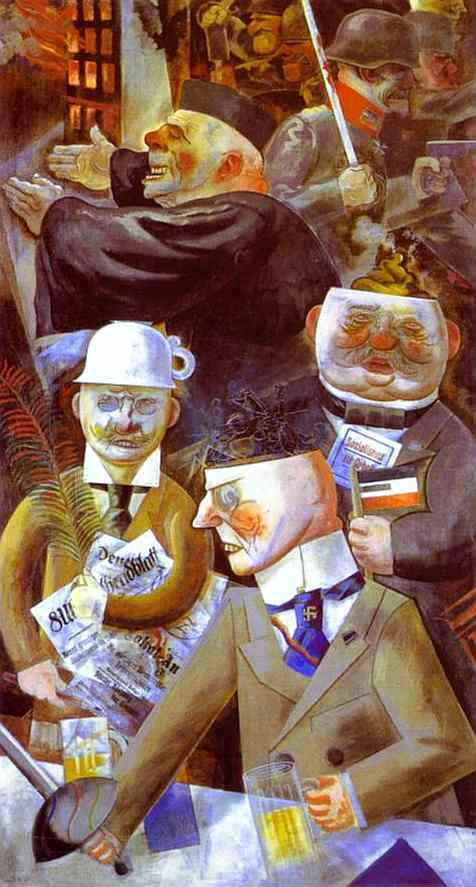
----Gramsci
~
This is probably the shallowest Reith Lecture I have ever heard; here was J.Sachs with his unbounded optimism addressing an old-world European audience steeped in cynicism and full to the brim with black thoughts. Invoking the names of J.F.K. and Adam Smith hardly endeared him to anyone and talking of Nick Stern as a "hero of our time" produced guffaws of laughter. To top it all, former spice Girl what's-her-name-was asked to comment. Yeah, like, we should like have more women's empowerment.
~
Sachs seemed to warm to such jargon. Yes, we must get people on the "development ladder," "eradicate poverty" and so on. And who would bear the costs of these world-shaking solutions? That's the beauty, he adds..the rich don't have to sacrifice that much, the technology allows one to make real choices on the cheap. What can one expect from an algebraic mindset. Economists and engineers know a few tricks: technical problem, technical solution.
~
~
Do we still live in a world?.
As in Late Antiquity, we live in a time that is devoid of the world. The modern age starts not with a return to the world but with inner-worldliness (Descartes). In fact, there is a contempt for the world, for what is "mere matter" or extension. Only the glittering soul within is free in a world given over to law, mechanism (satanic mills) and doom. We, the modern gnostics, are on a voyage, the second turning inwards (Hannah); this culminates with Hopper where the great American frontier has now moved inwards.
.
Capitalism is not a triumph of "the west" or of "Europe" but of abstract space and time over lived space and time. From now on place can only be parochial, myopic. The Red Man saw this with uncanny clarity: you have sacrificed the earth's slow wisdom for speed. China and India will find that they are defeated even as they win. The future isn't red..it is grey.
~
And the leveling of all distinctions continues. The aspirations of "the poor" must be to be like you cousin Louis, brother Sachs. What is left, then, of politics but a post-politics, what Foucault would call the 'administration of things', the management, regulation and enhancing of Life? Here it is not life as bios, but zoe, pure, naked life of the body. Politics is the calculus of pleasure and pain. What is important now is the bourgeois excess of life, this is the new infinity, the new 'political' dimension: the right to happiness is both what the political system is supposed to guarantee (and how it is evaluated) but also a goal that is unattainable.
~
Under such circumstances the world disappears. 'Instant living'. Hannah Arendt: once labour is admitted into the political realm, once it becomes the main focus of politics (household economics) then how to establish continuity, how to bind people who are concerned about their own private pleasures and pain-things that can never be communicated except as a spectacle?
.
Permitted jouissance turns into obligatory jouissance.
.
You must, because you can...a life of excessive pleasure or a universalized principle of pleasure..there is nothing else.~
And yet, a radical, excessive pleasure would destroy all social limits, constraints, norms. This, at heart, is the cultural contradiction of capitalism..what Tawney would say corresponds to the divine frenzy. The commodity doesn't deliver..it is never meant to. It is the allure of happiness, the promise of a bliss that it holds out to the imagination that we find so enticing. At the heart of each commodity is a hole or, like a mirage, when we reach it we realise it isn't what we thought it was...
.
The drive to a pure autistic jouissance (through drugs or other trance-induced means) arose at a precise political juncture..At this moment the only option left was a direct, brutal passage a l'acte, push-toward-the Real..
Extreme sexual jouissance, terrorism, or (oriental) inner experience. One cannot but help think back to the twenties. A withdrawal from socio-political engagement into a direct contact with the Real. But this has come and passed and now there is only indifference. One thinks back to the exhaustion of the Seventies and the beginnings of a whole retro culture, as if we were witnessing the End of History. From now on: deja vu, the uncanny, Groundhog Day. But hasn't bourgeois culture always been in a crisis? When hasn't there been talk about the Last Days of Mankind, the Decline of the West? Perhaps this is a story the moderns like telling themselves..the story of how all stories came to an end.
~
Capitalism's ontological importance is its ability to lead to the desacralization of all sacred bonds, undermining every stable form of representation. All that is solid melts into air...
.
The crowd is just a mass of individuals. As Guenon saw a long time ago: in the Reign of Quantity society is the same thing as the individual. Modern technologies (the Internet) only enhance the trends of the century of the self: solipsistic, churning out anxieties. Sachs again: we live in a connected world. Do we?
~
The problem of leisure: when there are no limits to overcome how do we kill time? What happens when the shock of the new doesn't shock? The pictures from Abu Ghraib look vaguely familiar, the Towers elicit the response: I thought we were watching a movie. As Hannah acutely observes, after Auschwitz the unimaginable has become imaginable, the impossible has become possible. Are we now living in a worldless space, where interior/exterior, centre/periphery distinctions become less valid? Are we now living in a Long Sunday?
~
No, not quite. Things are never as bleak as theorists make out. You've been watching too much Bergman. Less valid? Yes. But the world is still the world, friendship and love, duty and compasssion and a thousand other things are still with us. Is this still not the tent of scattered stars that love has made?
.
One size fits all...Enjoy!.
--quotes from Zizek, Parallax View.
.
One size fits all...Enjoy!.
--quotes from Zizek, Parallax View.
~
~
From Harper's:
.
The old and the unworldly had the worst of it. Many were driven to begging, many to suicide. The young and the quick-witted did well. Overnight, they became free, rich and independent. It was a situation in which mental inertia and reliance on past experience were punished by starvation and death, but rapid appraisal of new situations and speed of reaction were rewarded with sudden vast riches. The twenty-one-year-old bank director appeared on the scene and also the high-school senior who earned his living from the stock-market tips of his slightly older friends...
.
Amid all the misery, despair, and poverty there was an atmosphere of light-headed youthfulness, licentiousness and carnival. Now, for once the young had money and the old did not. Moreover, its nature had changed. Its value lasted only a few hours. It was spent as never before and never since; and not on the things only old people spend their money on. Bars and nightclubs opened in large numbers. Young couples whirled about the streets of the amusement quarters. Everyone was hectically, feverishly, searching for love and seizing it without a second thought. Indeed, even love had assumed an inflationary character.
---from Sebastian Hafner, Defying Hitler.
.
The gaze: as if we were searching for our neighbours' faces to see how human beings still looked. (The deep, inward-looking gaze of the portraits of Late Antiquity). The Verists: fascination with anonymous cripples and prostitutes, cocaine-addicted performers, marginals of all shapes and sizes, delinquents, degenerates and criminals..all elicited the unflinching gaze: to locate the grotesque in everyday urban life and in the faces of the respectable and criminal alike. The beast was within, not on the frontiers and the desire to learn to out stare nothingness, look into the eyes of Medusa, was a sort of intoxication.
~
A fierce sincerity..to mirror the world, including the perverse, nocturnal creatures hitherto excluded. To map the soul of the theatrical self, the so-called pillars of society with their absurd pretension.
.
At the same time, an acute awareness that they were at a historical juncture, a threshold. At such frontiers all sorts of people cross paths: the fabulously rich and the war veteran begging for money. And this scene is repeated today outside the favelas. Here, in a moment, the wounded cross paths with the gluttonous.
.
And still we push on , with our 'development ladders' (one billion people live in slums, three people have as much money as the poorest 48 nations). Platzangst: the illusion that one has made no progress while one has been attempting to cross a vast, unending square. The problem for the moderns is that they worry, to paraphrase Gertrude Stein, that there is no there there.
.
The old and the unworldly had the worst of it. Many were driven to begging, many to suicide. The young and the quick-witted did well. Overnight, they became free, rich and independent. It was a situation in which mental inertia and reliance on past experience were punished by starvation and death, but rapid appraisal of new situations and speed of reaction were rewarded with sudden vast riches. The twenty-one-year-old bank director appeared on the scene and also the high-school senior who earned his living from the stock-market tips of his slightly older friends...
.
Amid all the misery, despair, and poverty there was an atmosphere of light-headed youthfulness, licentiousness and carnival. Now, for once the young had money and the old did not. Moreover, its nature had changed. Its value lasted only a few hours. It was spent as never before and never since; and not on the things only old people spend their money on. Bars and nightclubs opened in large numbers. Young couples whirled about the streets of the amusement quarters. Everyone was hectically, feverishly, searching for love and seizing it without a second thought. Indeed, even love had assumed an inflationary character.
---from Sebastian Hafner, Defying Hitler.
.
The gaze: as if we were searching for our neighbours' faces to see how human beings still looked. (The deep, inward-looking gaze of the portraits of Late Antiquity). The Verists: fascination with anonymous cripples and prostitutes, cocaine-addicted performers, marginals of all shapes and sizes, delinquents, degenerates and criminals..all elicited the unflinching gaze: to locate the grotesque in everyday urban life and in the faces of the respectable and criminal alike. The beast was within, not on the frontiers and the desire to learn to out stare nothingness, look into the eyes of Medusa, was a sort of intoxication.
~
A fierce sincerity..to mirror the world, including the perverse, nocturnal creatures hitherto excluded. To map the soul of the theatrical self, the so-called pillars of society with their absurd pretension.
.
At the same time, an acute awareness that they were at a historical juncture, a threshold. At such frontiers all sorts of people cross paths: the fabulously rich and the war veteran begging for money. And this scene is repeated today outside the favelas. Here, in a moment, the wounded cross paths with the gluttonous.
.
And still we push on , with our 'development ladders' (one billion people live in slums, three people have as much money as the poorest 48 nations). Platzangst: the illusion that one has made no progress while one has been attempting to cross a vast, unending square. The problem for the moderns is that they worry, to paraphrase Gertrude Stein, that there is no there there.
Monday, January 28, 2008
Black Sun

Pleasure is fundamentally the intensified awareness of reality, and springs from a passionate openness to the world and love of it.
---Hannah Arendt
~
I think that that is my favourite one line from Hannah and I don't think I'd swap it for anything else. I can understand the darkness, the bitterness of people who have had to go through terrible, unbearable pain, grief or loss. And there's a sadness which, like the snow in Ireland, is general all over. And perhaps without religion and her mysteries, without a living contact with nature, we find all types of subsitute forms that can answer this need for depth, for profundity. But I can't help but think that a part of this morose spirit is fake, is really self-inflicted, and quite needless and probably pointless as well (Beth's point).
~
I was going to write about costume and fashion and its relation to capitalism (loads of Braudel quotes) but my attention was caught by something someone said about grace-and what use are the words of philosophers, historians, or theologians to me in this regard? What is the point of talking about grace from the outside?
.
There are levels of grace, a hierarchy of them. One says grace for the food one receives, one can recognize the grace of a dancer; in both it seems there is the sense of proportion, a recognition of balance. Equally, there is a sense of gift and reciprocity, one might even say etiquette: one has the good grace to accept or return a compliment. The gifted artist gives something of his gifts away and this leads to us being thankful for being brought into the circle of admirers
.
However, on the other hand, is it not the case that grace is completely disproportionate to what we expect or can comprehend? So, whilst grace is the very ability to be thankful for what is not ours (Rumi would say free will is the capacity to be thankful for God's Beneficence) is it also not an awareness that our response will always be lacking?
.
Two further points. I don't think one can ever reflect on grace without the notion of thankfulness. To 'truly bless', as Auden might say, is not such an easy thing. Many are stuck in 'la'. For the entirely self-made man nothing is 'given', all is possessed or coveted. Only an awareness of what is given to us -life itself-can lead to grace. Secondly, is grace the ability to not be weighed down by our own gravity? Grace is a 'descent' but by it being so it allows an ascent-and that too is a recognition of something beyond one's narrow horizons: lightness , in both senses of the word
.
Perhaps we humans,
have wanted God most as a witness
to acts of choice made in solitude.
Acts of memory,
of sacrifice. Wanted
that great single eye to see us ,
steadfast as we flowed by.
Yet there are other acts
not even vanity,
or anxious hope to please, knows of-
bone doings, leaps of nerves, heart-
cries of communion: if there is bliss
it has been already
and will be; out -
reaching, utterly
Blind
to itself,
flooded
with otherness
Sunday, January 27, 2008
Conquistador of the Useless
Are you happy?
Er..why do you ask?
Dunno. Just like that.
Guess I was until I had to think about it!
Perhaps there's something in the soul that hankers for darkness, that desires to be lost in something that is totally foreign to itself. But it's impossible to think that way when one is surrounded by light (wish I'd brought The First Man with me now) . All this striving for narrow confines, all this melancholic brooding, is beginning to become a touch boring (I can only imagine the Internet leading to an expansion of self-pity and introspection).
What is it?
You ask too many questions!
Perhaps you find the world trivial, people superficial, life a bit fake..not quite the real thing.
Perhaps you find the world full of meaningless suffering, inexplicable contingencies. Understandable. No one can think otherwise, no-one can live like a Stoic. But there are escapes, and then there are escapes....
Why do I watch a film expecting it to be profound, something deep, something that will move me? Is it to fill some vacuum? Isn't that what we expect of all art? (Plato, that old wahabi, might have something to say on that!) . Why do we think eccentricity, madness, is the only form of genius, the only thing worth talking about (The Romantic legacy, perhaps)? What would it mean to have sound instincts, to live heartily, with attachments and bonds-and not as an exile, as a fanatic, estranged from one's life, one's times? (Roberto Calasso is brilliant here : the American woodsman as the future, the cowboy who "discovers" the frontier", the colonialist who from inner boredom is compelled to go "where no man has gone before", the 'settler' who sees only wasteland where there is the Red Man, the Palestinian...).
What could be worse than having simple desires, what could be more difficult than saying 'Yes!' to life. Not only must we live with the void, and not be too hasty in filling it with our own private fantasies, remedies, but we must also recognize that to see only the void is not right-seeing and is an act of profound and startling ingratitude.
In the deserts of the heart
Let the healing fountain start,
In the prison of his days
Teach the free man how to praise
W.H. Auden
There will be blood.
What utter crap!
Fitzcarraldo.
What utter crap!
No, Hollywood always/usually trumps because it shows real people. For similar reasons, all this Sufi jargon and 'mysticism' seems, to my mind at least, to miss the point. We have to speak about our times, and in our language. I'm sure all this convoluted thought of the Europeans is very intelligent at its own level, but please, give me a break...what price naivete and what would we give for some solid English writing, for some pragmatism to dispel the hold of these evenings of the mind ?
'Life, at all times full of pain, is more painful than the two centuries that preceded it. The attempt to escape from pain drives men to triviality, to self-deception, to the invention of vast collective myths. But these momentary alleviations do but increase the source of suffering in the long run. Both private and public misfortune can only be mastered by a process in which will and intelligence interact: the part of will is to refuse to shirk the evil or accept an unreal solution, while the part of the intelligence is to understand it, to find a cure if it is curable, and, if not, make it bearable by seeing it in its relations, accepting it as unavoidable, and remembering what lies outside it in other regions, other ages, and the abysses of interstellar space.'
---Useless Knowledge.
This is one of my favourite passages, and is full of homely wisdom, good advice. But something else holds my attention today. Yesterday, at the Sunday market, amidst the onions and carrots, the plastic baskets and smuggled crockery (which was spelt crochery) was a small book stall. Most of the stuff was Sidney Sheldon and Harold Robbins (man, they're really popular here!) but there was also a dusty, well-worn copy of old Russell. How amazing that one can find such things amongst the necessities of the world! In it were underlined the following words:
Whatever we may think, we are creatures of Earth, and we draw our nourishment from it just as the plants and animals do. The rhythm of Earth life is slow; autumn and winter are essential to it as summer and spring, the rest is as essential as motion. To the child, even more to than the man, it is necessary to preserve some contact with the ebb and flow of terrestial life. The human body has been adapted throughout the ages to this rhythm, and religion has embodied something of it in the festival of Easter....
Many pleasures, of which we may take gambling as a good example, have in them no element of this contact with the Earth. Such pleasures, in the instant when they cease, leave a man feeling dusty and dissatisfied, hungry for he knows not what....
The special kind of boredom from which modern urban populations suffer is intimately bound up with their separation from the life of Earth. It makes life hot and dusty and thirsty, like a pilgrimage in the desert. A happy life must be a quiet life, for it is only in an atmosphere of quiet that true joy can live.
Friday, January 25, 2008
Disappearing World

By the end of the 19th century the gestures of the western bourgeoisie were irretrievably lost.
'In the cinema , a society that has lost its gestures seeks to re-appropriate what it has lost while simultaneously recording that loss. An era that has lost its gestures is, for that very reason, obsessed with them (The Marlboro Man as an image of coolness, courage). 'Bourgeois man's move to interiority, psychology.Silent cinema: the attempt to evoke what was slipping through its fingers for ever.
----Notes on a Gesture, Agamben.
To know is to know of departures, not destinations; to know desires, not the desirable. There is no telos, no purpose to Nature. Just process. The medium is the message. It is a prejudice , a presupposition of the exact sciences that reality is only that which can be known objectively. A total picture would, surely, have to include consciousness itself, the mind that 'knows' , as something objectively known as well? Escher! The mind is both 'subject' and 'object'. The sciences themselves are a product of consciousness.
--From Levinas on Husserl.
The enlarged but fragmented identities of the city. Speed implies we never rest on one; the gaze can never be allowed to settle. A restless mind finds itself disinherited from the earth's slow wisdom. We live in the 'space of flows,' where all is emerging, all is disappearing: all that is solid melts into air. The modern is multicoloured, polyphonic; the old world is grey-and so is mass industrialized society.
The technologies and institutions of modernity-writing, painting, sculpture, drama-give way to other media, ones more appropriate to an age of liquid modernity: the television, film, radio, the Internet. The world itself has become a city. All is flux, light and diversity. All seriousness dissipated by the 'empire of happiness' , that 'pagan concept' that holds us spellbound.
----From Williams Raymond, The Politics of Modernism.
Hugo Munsterberg, commenting on silent movies and how modern media dulls the senses says, the massive outer world has lost its weight..it has been freed from space, time , and causality. [He feared that] moving pictures reach complete isolation from the practical world.
---From R.Sennett, Flesh and Stone.
Society of the Spectacle: DeBord.
Television , with its flickering series of trivial momentary unreflective uncomprehended images, pictures the state of the prisoners in the Cave .Captivated by the spectacle of the plain ordinary man or the absurd, we must engross ourselves in the lives of other people, their petty dramas and tribulations. But you take things too seriously old bean. It's only light entertainment.
Hannah Arendt: The sad opaqueness of a life centred around only itself; a weightless irrelevance. The unbearable lightness of being...
'But there is real pathos in this dying people. These are my people-my own father, brother, mother, aunt and uncle...Yet I have no illusions: the death of these archaic, unprofitable, businesses is inevitable..But it is also the case that something rich and timeless that bids us to our roots and past, something central to our cultural imagination..is being lost. '
---G.Bowley, on the decline of farming in England (Prospect magazine)
'The mountaineers are perhaps America's only peasantry.These men and women have been shut up in their loved mountains since the coming of the first settlers , and have conserved their rough, antique modes of living. the mountains still hold more of mysterious life than a stranger can quickly penetrate. The scattered huts shelter men almost startled by their own voice. Their speech has the intonation of solitude.
A dynamic sense of freedom, unconfiding, unadministered. Knowing only the stark changes of life, the unexplained varying of sun, wind and rain, the diurnal infusions of light and darkness , and the sporadic labour of the open air, the mountaineer obeys instinct without discriminating. Though unconsciously he carries within him, as he breaks into the laurel, that primal instinct of all, the instinct for law.'
---V.S.P., 'The Pritchett Century'
'Modern western culture is largely shorn of attentiveness to both habitat and habitus. Where we live-to what we are rooted- no longer defines who we are. We are, in short, a people without "habit", with no common custom, place or dress to lend us any shared meaning.'
---B. Lane, 'The Solace of Fierce Landscapes
Thousands of years were needed to mould these intensive, monotonous melodies and to bring them to their final form. Unlike the polyphonous western music, which almost always tends to express individual feelings, these Arabian melodies, with their eternally repeated tone-sequence, seem to be only tonal symbols for an emotional knowledge shared by many people-not to evoke moods but to remind you of your own spiritual experiences. They were born very long ago out of the atmosphere of the desert, the rhythms of the wind and of nomad life, the feel of wide expanses, the contemplation of an eternal present; and just as the basic things of human life always remain the same, these melodies are timeless and changeless.'
---M.Asad, Road to Mecca
Never read more than you can live.
---Goethe.
Instead, we think that an ever expanding amount of books, information, images and sounds can be registered, made sense of. But surely there comes a time when things become blurred. Sitting in a train that goes too fast means that we cannot 'take things in'. The world rushes past us, and we either regret the missed opportunities (for we cannot slow things down) or understand little of what comes our way.
Wednesday, January 23, 2008
The New World Order

The 'new world order' is the same old disorder
~
Tell me, when you destroy a city what do you see? Even it is for only a moment, the image of my city will be registered by your eye, imprinted there. Of this much I am sure. Today you want to talk to me about how order is sustained by weapons, by metal that burns, by metal that melts.
~
But why don't you want to talk to me today about Blake and Ginsberg, about the burning flames of Fall, the melting hearts of Spring?
~
Every order creates a disorder. You won't admit this. But what would you do without us barbarians*, the redundant, the undesirables, the undeveloped, the underdeveloped, the wasted, wretched scum of the earth. How could you sleep safely in your warm rooms, your well lit homes, if there wasn't this terrible darkness outside?
~
We have to destroy the city before we can save it.
~
Today you want to talk to me about how you'll make things alright, how you'll teach us to live in peace again, explain to us what is meant by freedom and other fine words. All those evil people vanquished, the beast within our hearts expelled. Russians, Chinese, Commies, ..all a threat to this vision of a seamless order. How familiar your shrill voice sounds, mullah of suburbia: Jew, Christian, infidel...Purity and danger. Today it is bitter cold and you do not want to talk to me about the Trenches, the Bomb, Auschwitz...
~
But things survive, people endure. The capstone shifts, things can be overturned, what is lowest can become highest. The thread is taken up again and from this we shall weave an invisible city, one that is beyond your comprehension, beyond your imagination. We know you own the skies, have dreamt of the City of God. But we, like the Red Man you destroyed a long time ago, shall always turn our gaze lovingly back to earth, to the human world we knew, and look other human beings in the eye once again.
Did the people of ___
use lanterns of stone?
Did they hold ceremonies
to reverence the opening of buds?
Were they inclined to quiet laughter?
Did they use bone and ivory,
jade and silver, for ornament?
Had they an epic poem?
Did they distinguish between speech and singing?
Their light hearts turned to stone.
It is not remembered whether in gardens
stone gardens illumined pleasant ways.
Perhaps they gathered once to delight in blossom,
but after their children were killed
there were no more buds.
Laughter is bitter to the burned mouth.
A dream ago, perhaps. Ornament is for joy.
All the bones were charred.
It is not remembered.
When bombs smashed those mirrors
there was time only to scream.
There is an echo yet
of their speech which was like a song.
It was reported their singing resembled
the flight of moths in moonlight.
Who can say?
It is silent now.
------Denise Levertov
*and why has everyone returned home so pensive?
Because night's fallen and the barbarians haven't arrived. And some people came from the borderand they say the barbarians no longer exist
Now what will become of us without the barbarians?
Those people were some kind of solution.
---Cavafy.
Sunday, January 20, 2008
Remembering off by Heart
If a wound hath befallen you, a wound like it hath already befallen others.
---Q: 3:140
I remember everything.
No, you remember nothing.
On certain days, at certain times, the light falls in a particular way. And we are transported to lives that are given up, aborted, and to strange places. These are the dead branches on which we sometimes float, effortlessly. It is as if the music had opened us up, striking some deeply familiar chord, as if we had found an unused room, full of discarded things on which only dust and time accumulates. A music box, a map coloured in with red and blue pencil, the coastline with ink, a tattered piece of cloth. They belong to and do not belong to us. Other hands have lovingly stroked them.
And now the memory of it fades. Unsure of ourselves we hold on ever more tightly. It cracks, it breaks, but never shatters and we wonder if the reflection is distorted by our own desire or something else...
We stammer, trying to recall half-forgotten words. What is meant by half-forgotten ! The tongue, like the hand, betrays us. What can their simple gestures convey of the heart's torment when we are in cellar, far from the gaze of any human being...when the cold dead eye stares, reducing us to nothing. Is it really any ? Why do you deceive yourself..like a mad person you sometimes say 'you' when you mean to say 'I'..you repeat yourself, as if that would help...I am what..
I walk diagonally across the field. The green has given way to the heavy brown in places. Some god might find meaning in this. The shadows cut deeply. Perhaps they have arisen from the very depths of the earth itself. Darkness seeking darkness. By walking I do not exist. Some do this by thinking, storing up counters on the grey squares of the mind.
For this soul needs to be honoured with a new dress woven
From green and blue things and arguments that cannot be proven.
It is going. You want me to name you but amongst transient things, this flickering flame called life, is there anything more ephemeral than I?
What is this pain but the remembering off by heart? I cannot name you. I do not know you. I have never known you. All that remains is the longing not to forget.
Friday, January 18, 2008
Wondering
The sheer delight of a child's apperception is based on wonder ; and deny it as we may, knowledge and wonder counteract one another...Now the great and fatal fruit of our civilisation based on knowledge, and hostile to experience, is boredom. All our wonderful education and learning is producing a grand sum-total of boredom. Modern people are thoroughly bored....
---D.H. Lawrence.
We have stuffed ourselves with the thoughts of others, dazed ourselves with books. Been there, read that. Tick. Nothing sinks in. You've been to the finest schools and learnt how to 'critique' things, how to 'think on one's own'. At least that's what you were told, what you were sold. We remember all the wrong things. You see a door and stop to think about it. But only by walking through it do you understand what is inner, what is outer, what is the future, what is the past...
A 'knowledge', an understanding that is not subject to criticism or analysis, that isn't reduced to a 'problem' that has to be resolved, that isn't an 'object' of thought, that isn't 'value neutral' or free of regret...this the modern world cannot abide.
A reflective, self-conscious age..a representative age. One that thinks about life without living it, or that lives it -like a revolutionary-without thinking about it. Skill and inventiveness in constructing fascinating illusions..But the present generation, wearied by its chimerical efforts, relapses into complete indolence.
A reflective age that only seeks mirrors, self-affirmation, that abhors the very possibility of realities beyond the self's narrow confines, that is oblivious of the fact that reason can 'bind' us to one level of reality. Bourgeois sensibilities and a reaction to them is set up: to be or not to be: all or nothing.
The whole age becomes a committee..unable to act decisively, full, bloated with bloodless abstractions and ideas. We have ceased to live soulfully, to live from within. Either the analysis of life or a complete revolt against it in the cult of action and ceaseless agitation is our truth. We fail to see the common thread that unites these disparate approaches but one only has to think that the action is , more often than not, a reaction to stifling boredom, to a leveling down of the spirit, to realise that the desire to flee the heaviness of thought in the leap of action, is , fundamentally, not a desire to re-engage with the world again, but to escape it in whim and fantasy. The world has not known such a radical ascetic as this before...
We are governed by the ethics of the ordinary, the useful. Finally, theoretical discussions are put to one side, they cannot be resolved. Far better to play backgammon. Power, money or happiness are the final arbiters in matters pertaining to truth. And this, it is contended, is a sign of our maturity, our pragmatism! To live without any ideals, without being stopped in one's tracks by the beauty of a face, the sadness of the flowers, the darkness of the trees but, instead, to be acutely aware of our mediocrity and hold that we are nothing but the quintessence of dust, a bare-forked and bewildered animal, subject to the same mechanical forces that distribute atoms throughout the universe. A deformed notion of intelligence lacks beauty. And then we wonder why the modern age is so nihilistic! Having killed 'god' we, we who live in this metaphysical vacuum, now face the greater quandary, wondering how to kill Time before it kills us.
(citations: Kierkegaard: The Present Age)
Tuesday, January 15, 2008
The Forgetting of Being
I returned to this book, half not knowing what to expect. I rarely complete a book -I'd like to think of Dr. Johnson here, but it's more a case of Franzen's 'Perchance': who, today, can read linearly ? (C is an exception, of course). I've started but I won't finish. Perhaps it is nothing but the desire to leave things open, incomplete, undefined. Scatter brains. More likely just a case of old fashioned Kashmiri laziness. And to re-read a book is almost tantamount to sacrilege, as if one could repeat the pleasure of it, fix it in one's memory.
But we do that all the time. This wyrd compulsion to repeat, to sift out all that is important from the flow of words and life and monumentalize it in a text, a recording, an 'image'. The set phrase, the cliche..well-worn talismans of the forgetful, of those without a legacy.
I often wonder why the swami has turned the corner of this particular page and not another. Sometimes I trace the marks she has left around certain passages, certain words with that thick, blunt pencil of hers. If one could reconstruct these select turns of phrases,make a coherent story out of them, I suspect one could picture a certain style of soul.
A stream of images and words passes across the film of our eyes. Strangeness is registered. Two worlds collide. The eye blinks. The work is done. And now, and now, and now.
"...[E]uropean sciences which reduced the world to a mere object of technical and mathematical investigation and put the concrete world of life , die Lebenswelt, beyond the horizon..the more he advanced in knowledge, the less clearly he could see the world or his own self"
"Man is bound to the world like the snail to its shell: the world is part of man, it is his dimension"
"all that is human carries the seed of its end in its beginning"
The thinking self, alone in the world, is the beginning of the existentialist hero. To live with doubt, the wisdom of uncertainty, as opposed to a particular type of religious thought which is reductionist: the saved and the damned. Isn't that why the mullah is so fat? He has no courage!
"In the course of the Modern Era Cartesian rationality has corroded, one after the other, all the values inherited from the Middle Ages". But the victory of Reason ushers in the possibility of all sorts of wild irrationalities. "The fanaticism of an age without God..anything can be considered a value". Paradox of paradoxes: the sleep of reason brings forth nightmares. What now can stop the onslaught, the blizzard that's starting up, must one despair at the loss of values, the reverence formerly felt for the cosmos..the pleasure of the world (Arendt)?
"Man is caught in a veritable whirlpool of reduction, where the world of life is fatally obscured and being is forgotten."
The world is the same old world, and we who are in the world all think alike. I'm sure I've read that somewhere.
What does reading do? Help us forget or help us remember? Protect us from the 'violence from without' or remind us of the loneliness within? The least we can say is that the word is the spirit of continuity, of memory, desire and hope. The world is a concept.
Lightness (I need Calvino here):
"What possibilities remain for a man in a world where the external determinants have become so overpowering that internal impulses no longer carry weight?" A question to the scientists: if there is only causality, what of freedom? [Titmuss would say: the market extends choices in one direction but it limits them in another. If altruism is one principle of action, if we grow by giving, then the market is indeed a constraint on what it is to be fully human..globalization is, then, not the opening of the world but a closing of it..what possibility is there left for escape? Levinas: Gagarin, on returning from the limits, says: there is no god here. From here on in, we face the universe alone.]
And in the race for lightness, to divest ourselves of our past, our memory, we have crossed the fateful boundary. There is a lightness out of profundity, and a lightness out of despair. "The lightness of existence where there is no eternal return", no cosmos, no marking of our words ("mark my words, Ubo would say), no inscribing of our acts in the divine book (Jonas).
Vertigo
"He is drunk with weakness, wishes to grow even weaker, wishes to fall down in the main square in front of everybody, wishes to be down, lower than down"
How to end this post? Lest we forget, the question is how to begin... to understand what is meant by half not knowing...
(citations from Milan Kundera, The Art of the Novel)
Sunday, January 13, 2008
Europe
There are only two important things in life: to remember.
And the second?
I forget.
Some people find 'the West'-if such a thing (still) exists-rather superficial. Perhaps this is because having reached a level of material development her concerns and problems appear to be to relatively trivial ones. There is surely some truth to this. Not having to face the constant pressures of life or overt political co-ercion, are all problems then reduced to a question of the value of existence itself, to a lack of coherence between the inward and the outward? Not just the de-centering of the self but the very questioning of the self and its relation to the world? (and that we use the word 'self' rather than 'being' is indicative, perhaps, of our inability to derive pleasure from living-in-the-world). Hedonists, like fundamentalists, don't look at the world in the right way, at the right angle.
Roll up, roll up.
Choose your villains. Capitalism and the market with its undue emphasis on negative liberty, on alienation and its unnecessarily 'thin concept' of man as a fundamentally deliberative and purposive being, abstracted from any political role, from any social context, from any place? The market is a principle, not a place. A principle of dealing with the needs of strangers. 'Needs' is misleading..desires. Like a mirror, bourgeoisie man can, it is argued, take on any form. What is identity but a temporary congealing of the flow of images. An 'undetermined animal'. There is no role for a conception of nature or essence or a teleological end. Instead: all is process. And if that is so what is life but a series of fragmentary moments, a series of atomistic impressions? From this has followed the most terrible pessimism: what binds man, then? Who is my brother? If there is only self-interest, a war of all against all, if 'pushpin is as good as poetry' then can there be a serious answer to this or is the answer: the State, fear, Power. Blood and Soil.
Can power be exercised only on those who are made 'subjects'? No, it is not just the inscribing of our lives in the mechanisms of state power and its calculus that holds us. To say that we must be uprooted first is, no doubt true. But there is aslo the more extreme form that exerts power by creating an image of the stranger, the out-law (here by image one must include what we conceive with our hands and minds). The Enemy must remain as different from 'us' as is imaginable, as is possible. Do not look into his eyes; the orthodox must seem him as radically distinct, without profile even. More than that: he is staged as such. Cavafy: how we need those barbarians!
But to see things in such a light is to tell only half the story. For this quest for distant horizons, the wild blue yonder, is not merely the expression of a desire to escape from bourgeois conformity. Nor is the shedding of the past, of worn-out forms, this self-willed amnesia, necessarily a sign of hatred for all that is 'given'; it can also be thought of as a grand attempt to achieve lightness. One must not seek out patterns too keenly. In a supreme act of lovingkindness, one must learn how to forget.
Subscribe to:
Posts (Atom)


